Thinking about buying in Marble Falls? The tricky part is that this market is not just one kind of place. You are often choosing between in-town convenience, lake-oriented living, or more space on the edge of town. This guide will help you understand how Marble Falls neighborhoods and home styles tend to differ, so you can narrow your search with more confidence. Let’s dive in.
How to Think About Marble Falls
A helpful way to read Marble Falls is through three big tradeoffs: convenience, water orientation, and space. Because the city sits on Lake Marble Falls in the Highland Lakes region, many buyers compare the inner city, the lake edge, and the outer acreage fringe.
The city’s 2024 comprehensive plan also gives you a useful framework. It describes parts of the area as rural, suburban, or urban in character, which can help you match your lifestyle goals to the right part of town.
In-Town Neighborhoods and Older Homes
If you want to be closer to the central grid and everyday services, older in-town neighborhoods are often the first places to explore. On the city’s subdivision map, pockets such as Northwood, Pecan Valley, Wildflower, and La Ventana reflect this more established inner-city fabric.
These areas can appeal to buyers who want a more settled street pattern and a classic neighborhood feel. The city’s Existing Neighborhood Zones are designed to preserve established density, lot dimensions, and street layouts while still allowing some infill over time.
What home styles look like in older areas
In these established parts of Marble Falls, you may see a wider mix of housing types than in newer edge developments. The city’s ENZ categories include estate homes on larger lots, detached homes, townhouse-style forms, duplexes and apartments, and manufactured housing in certain districts.
That does not mean every older neighborhood has every type. It means the older in-town fabric tends to be more varied, so buyers should look closely at each block and subdivision instead of assuming a one-size-fits-all pattern.
Why buyers choose older in-town pockets
You may prefer these neighborhoods if your priority is convenience and a more central location. The city maps show that access is shaped by major corridors such as US 281, FM 1431, and SH 71, so areas near the core often make it easier to get around town.
These neighborhoods can also work well if you like the idea of an established setting rather than a newer suburban edge. If that is your style, a focused neighborhood-by-neighborhood search can be especially helpful.
Downtown Marble Falls and Mixed-Use Living
Downtown Marble Falls offers a different experience from the surrounding residential areas. According to the downtown master plan, this part of the city includes a blend of Main Street District, neighborhood commercial, mixed-use, single-family, duplex, apartment, and mobile-home districts.
For buyers, that means downtown is less about large lots and more about proximity and day-to-day convenience. If you value a compact town-center feel, this is the part of Marble Falls worth studying early in your search.
What to expect near downtown
Main Street functions as the backbone of the core. As a result, the downtown area tends to feel more connected and active than outer residential pockets.
Home styles and property uses may be more mixed here than in a suburban subdivision. That is part of the appeal for some buyers, but it also means you will want to look closely at zoning and surrounding uses before making a decision.
Lake-Oriented Areas Near Marble Falls
Because Marble Falls sits on the banks of Lake Marble Falls, many buyers naturally focus on lake-adjacent options. In this corridor, buyers often compare Marble Falls with nearby communities such as Cottonwood Shores, Meadowlakes, and Horseshoe Bay.
That comparison matters because Burnet CAD lists these as distinct taxing entities. In practical terms, you are often not just comparing homes. You are also comparing jurisdiction, property context, and location along the lake corridor.
Common tradeoffs in lake-oriented areas
In lake-influenced areas, the main tradeoff is usually more immediate lake orientation versus less yard space and a more compact setting. On the city subdivision map, names like Waterside and Village at Lake Marble Falls reflect this type of location preference.
If your goal is a lifestyle property, second home, or a home that feels tied to the water, these areas may deserve a closer look. But if you want more land and separation between homes, you may find better fits away from the lake edge.
Newer Suburban Growth Areas
If you are drawn to newer construction or a more suburban layout, Marble Falls has several growth areas to watch. The city’s comprehensive plan identifies places such as Thunder Rock and Gregg Ranch as part of its suburban growth pattern, and the subdivision map also highlights Thousand Oaks, Legacy Crossing, and Roper Ranch.
For many buyers, these neighborhoods offer the clearest path to a newer home style and a more planned suburban setting. This can be especially appealing if you want a more predictable lot pattern, newer streetscapes, or less maintenance in the near term.
What home styles look like in newer areas
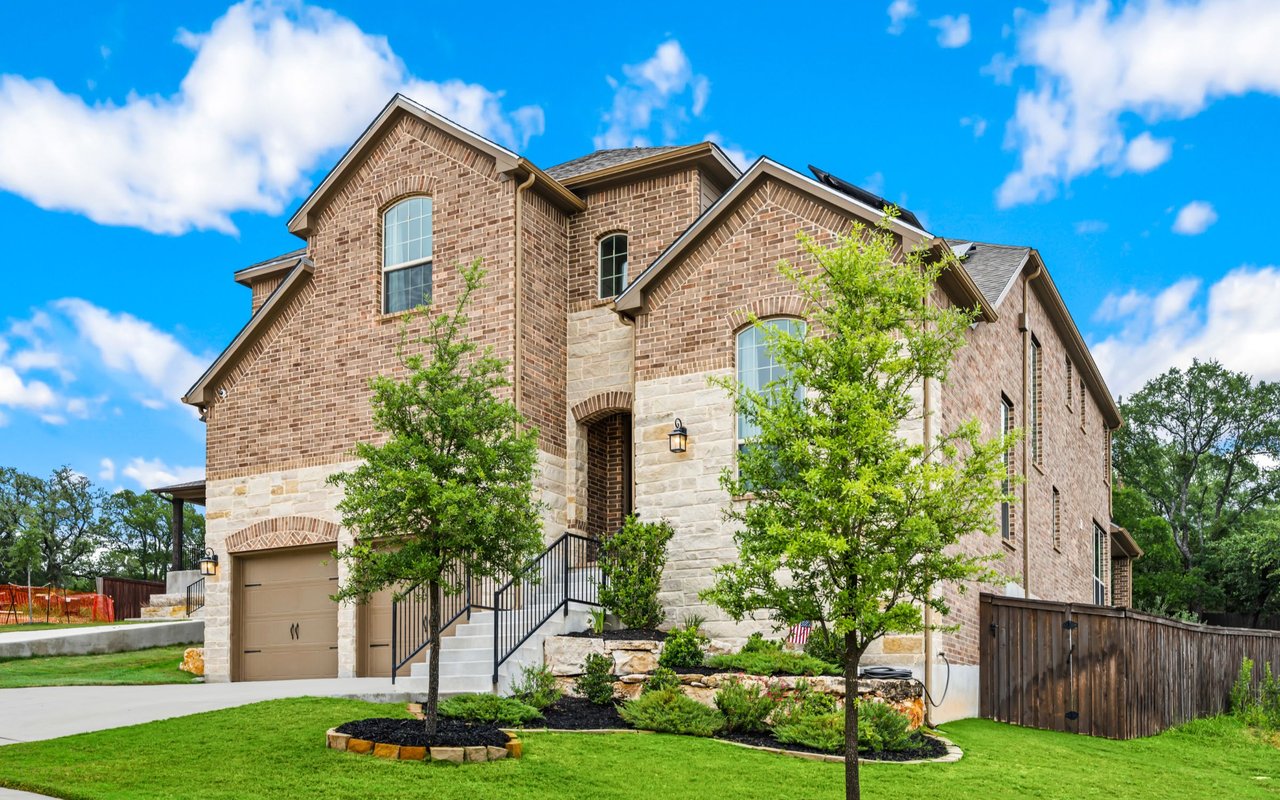
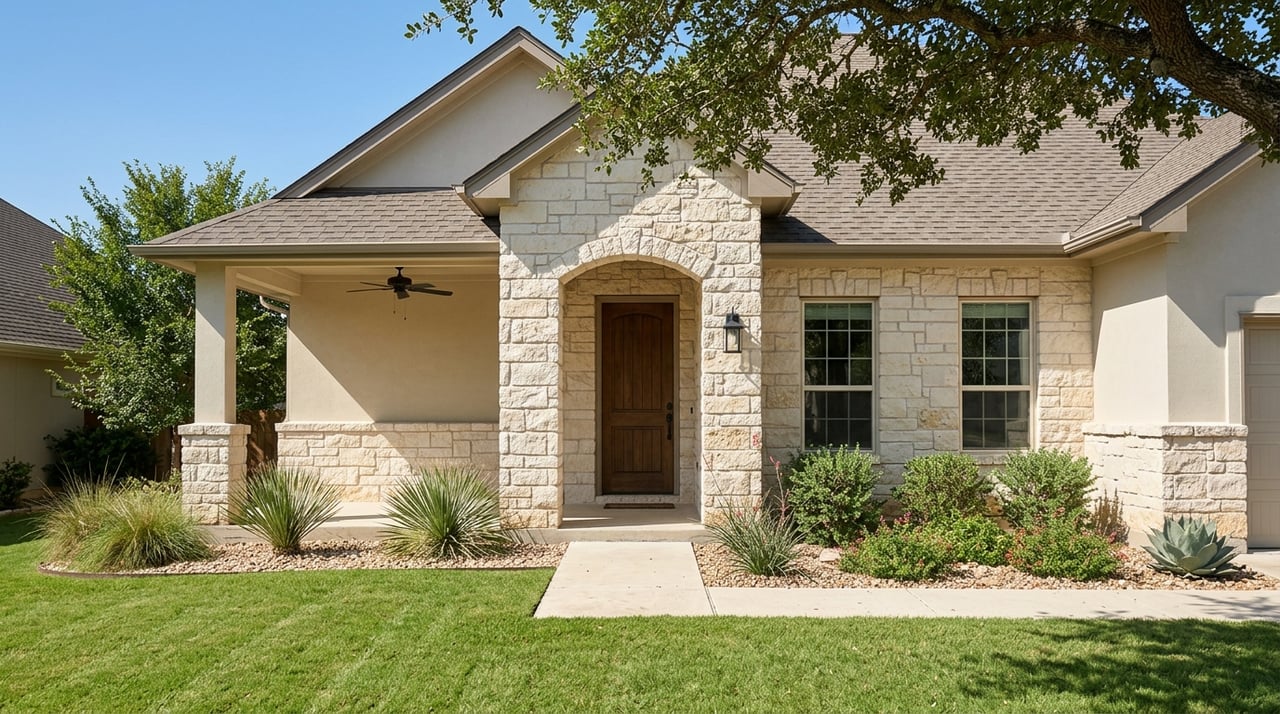
The city’s Neighborhood Residential district is the default single-family detached suburban district. Its standards allow a range of lot configurations, from about 12,000-square-foot suburban lots down to 4,200- and 5,000-square-foot compact options, along with some attached and townhouse forms.
That flexibility helps explain why newer edge communities can feel different from one another. Some may lean toward more traditional suburban spacing, while others may offer a more compact footprint with a newer-home feel.
Why buyers often like newer neighborhoods
If you are considering new construction or a recently built resale, these neighborhoods can offer a simpler starting point. The housing stock may be more consistent in age and style, which can make side-by-side comparisons easier.
This part of the market can also be a strong fit if you want modern layouts and a suburban growth-area setting. For buyers who like to compare builders, floor plans, and lot sizes, these neighborhoods often make that process more straightforward.
Rural Estate and Acreage Options
If space is your top priority, the fringe of Marble Falls may be the better fit. The city’s Rural Estate district is intended for large-lot subdivisions in areas where public utilities are not yet available, and it is meant to remain rural in character.
This district sets a clear expectation for acreage-style living. Minimum lot sizes range from 21,780 to 32,670 square feet, with lot widths from 90 to 125 feet and larger setbacks than more urban or suburban districts.
What buyers gain with acreage living
The biggest draw is usually more land, privacy, and a rural feel. If you want room to spread out or simply prefer a less compact setting, this category may line up well with your goals.
The tradeoff is distance. Outer areas generally give you more space, but they may place you farther from downtown and the main access framework of US 281, FM 1431, and SH 71.
How to Match Home Style to Lifestyle
When you narrow your search, it helps to ask a few simple questions first:
- Do you want to be closer to downtown and main roads?
- Do you picture a home with stronger lake orientation?
- Do you want newer construction or a more established setting?
- Is lot size a top priority?
- Are you open to comparing nearby lake communities as well as Marble Falls itself?
Your answers will usually point you toward one of four broad buckets: older in-town neighborhoods, downtown mixed-use areas, newer suburban growth communities, or rural estate fringe properties. From there, you can compare specific subdivisions and parcels.
Key Due Diligence for Marble Falls Buyers
Before you get too far into a home search, verify the property details that matter most in this market. This is especially important near the lake and on the fringe of town.
The city publishes public maps for city limits and ETJ, subdivisions, zoning, floodplain, and future land use. Those are strong starting points when you want to understand how a property fits into the bigger picture.
Check city limits and ETJ status
In Marble Falls, some properties may be inside the city while others may fall in the ETJ. That can affect how you evaluate the property and what local rules may apply.
The city’s development information notes that the NPS ordinance applies within both the city and the ETJ. That is one reason it helps to confirm status early, especially for fringe and lake-oriented properties.
Review floodplain and zoning maps
Buyers near the lake should review the floodplain map before narrowing a search. A home’s location on or near the water can be part of its appeal, but you still want a clear picture of site conditions and planning context.
Zoning matters too. Whether you are looking downtown, in an established neighborhood, or on the edge of town, the zoning district can tell you a lot about the surrounding pattern and what the area is intended to support.
Verify parcel details with Burnet CAD
Once you have identified a promising neighborhood or subdivision, Burnet CAD is the best public source for parcel-level verification. It provides property search tools, appraisal data, and interactive mapping that can help you confirm the basics.
That step is useful when you want to compare lot size, taxing entity, or parcel boundaries after you have narrowed the broader area. It is one of the smartest ways to move from general interest to informed decision-making.
A Smart Way to Search Marble Falls
The best Marble Falls home search usually starts broad and then gets specific. First, decide whether you care most about convenience, lake orientation, or space.
Next, narrow your search to a few neighborhood pockets that match that goal. After that, use city maps and parcel-level data to verify zoning, floodplain, lot size, and city or ETJ status before you get too attached to a property.
That process can save you time and help you compare homes more clearly. It also helps you avoid mixing together very different parts of the market that may not meet the same needs.
If you are planning a move to Marble Falls or comparing it with nearby lake communities, the right guidance can make the process feel much simpler. For personalized help narrowing neighborhoods, comparing home styles, and evaluating what fits your goals, connect with Shelley Herman.
FAQs
What are the main types of neighborhoods in Marble Falls?
- Marble Falls is commonly viewed through four broad categories: older in-town neighborhoods, downtown mixed-use areas, newer suburban growth communities, and rural estate or acreage fringe properties.
What are newer neighborhoods to explore in Marble Falls?
- Public city planning and subdivision materials identify Thunder Rock, Gregg Ranch, Thousand Oaks, Legacy Crossing, and Roper Ranch as key newer growth-area communities.
What should buyers know about lake-oriented homes near Marble Falls?
- Buyers often compare Marble Falls with nearby lake communities such as Cottonwood Shores, Meadowlakes, and Horseshoe Bay, where the usual tradeoff is stronger lake orientation versus less yard space and a more compact setting.
What home styles are common in older Marble Falls neighborhoods?
- Established in-town areas may include a wider range of housing forms, including estate homes on larger lots, detached homes, townhouse-style homes, duplexes, apartments, and manufactured housing in certain districts.
What should buyers verify before purchasing in Marble Falls?
- Buyers should verify city-limit versus ETJ status, review zoning and floodplain maps, and use Burnet CAD to confirm parcel-level details such as lot size, boundaries, and taxing entity.
Is downtown Marble Falls a good fit for buyers who want convenience?
- Downtown Marble Falls may appeal to buyers who prioritize a compact town-center feel and access to Main Street and surrounding uses over larger lots and a more suburban layout.