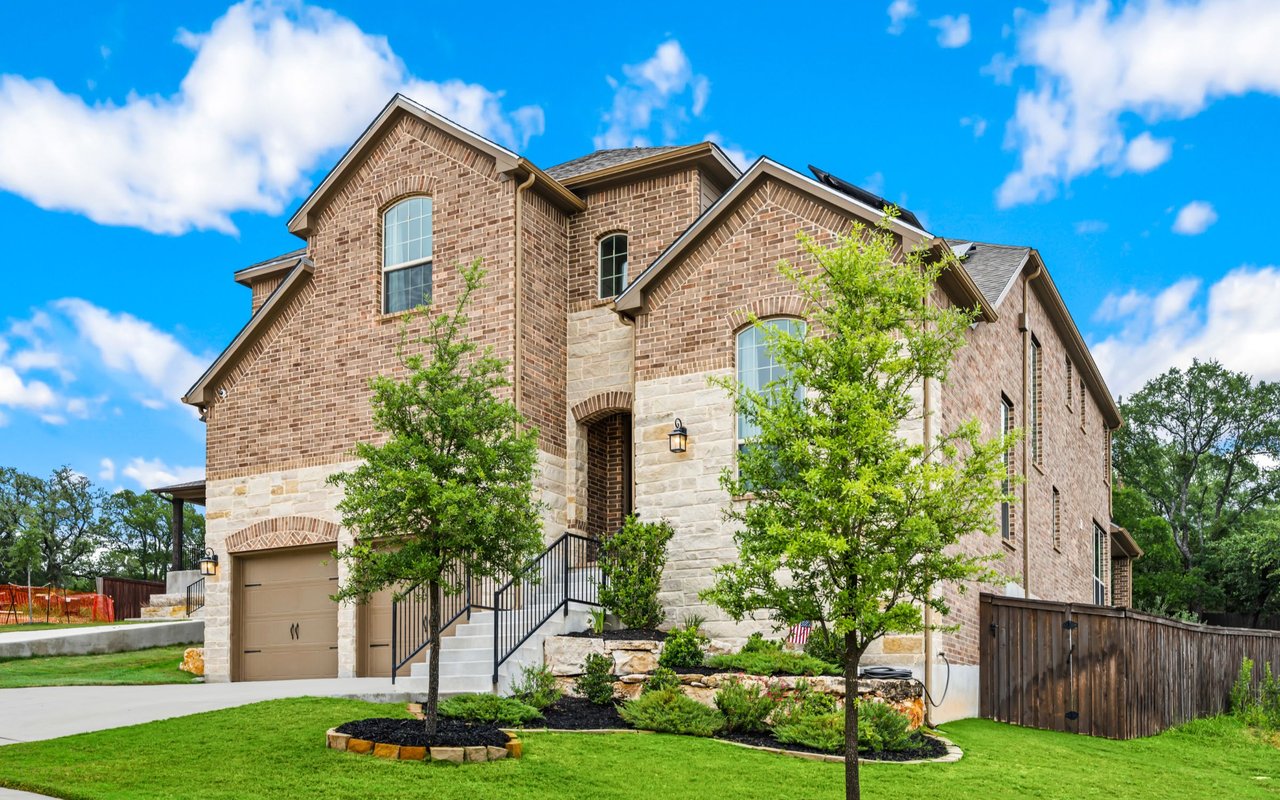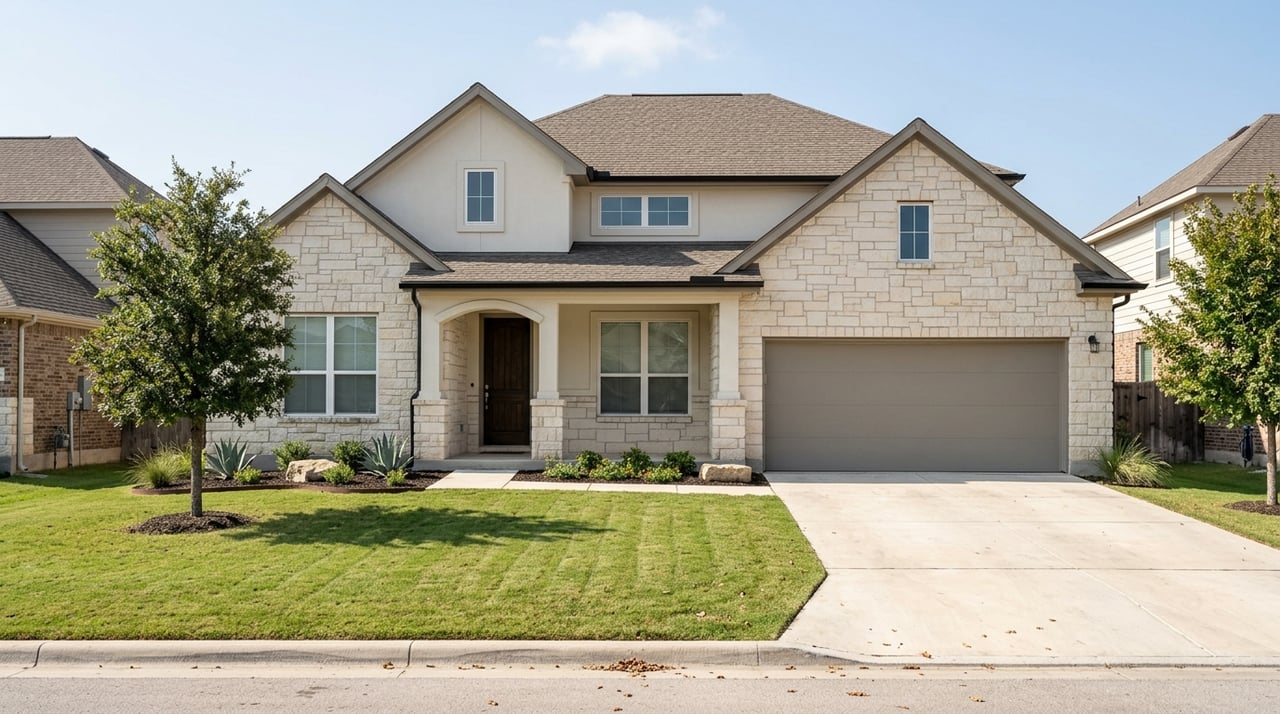
Thinking about trading North Texas traffic and metro sprawl for Hill Country views and a slower daily pace? If Marble Falls is on your radar, you are probably wondering what life really looks like once the move is over. This guide breaks down what to expect when relocating from North Texas to Marble Falls, from commute patterns and housing options to daily conveniences and lifestyle fit. Let’s dive in.
Why Marble Falls Feels Different
Marble Falls is not just a smaller version of a DFW suburb. It is a Hill Country city in Burnet County on the Colorado River, part of the Highland Lakes area, and located about 58 miles northwest of downtown Austin and 85 miles north of San Antonio.
That setting shapes everyday life. Instead of a large metro grid, you get a smaller regional hub with lake access, highway travel, and a more compact city core surrounded by more rural county areas.
Census estimates put Marble Falls at 9,413 residents in July 2024, while Burnet County was estimated at 55,722. The city also feels more concentrated than the county as a whole, with far higher population density, which helps explain why Marble Falls can feel active and convenient while nearby areas feel more spread out.
What North Texans Notice First
If you are moving from Plano, Frisco, McKinney, Prosper, or Celina, the biggest adjustment is usually scale. Marble Falls offers local essentials and community activity, but it does not operate like a major suburban system with endless retail corridors and multiple freeway options.
You may also notice that lake life is not treated like a special occasion here. Because Marble Falls sits on Lake Marble Falls and within the Highland Lakes chain, water access and outdoor recreation are part of the region’s everyday identity.
For many buyers, that is the appeal. You are not just changing homes. You are changing the rhythm of your day-to-day life.
Commutes and Getting Around
Expect a Car-Oriented Routine
Marble Falls is primarily a driving community. US 281 is a major route in the area, serving as a local thoroughfare, commuter highway, and freight corridor, and TxDOT is advancing an interchange project at US 281 and SH 71 near Marble Falls.
That tells you a lot about how the area functions. Most people rely on road travel, and errands tend to cluster along key corridors rather than being spread across a giant suburban network.
Local Trips Can Be Shorter
One point that may surprise North Texas movers is commute time. Census data shows a mean travel time to work of 14.9 minutes for Marble Falls residents, compared with 29.4 minutes for Burnet County workers.
In plain terms, living in town can mean shorter daily drives for local routines. If you choose a home outside the city in a more rural part of Burnet County, your drive times may feel longer and more spread out.
Walkability Is Growing, Not Defining
The city’s 2024 comprehensive plan calls for better pedestrian access to grocery stores, parks, schools, and downtown destinations. That is a good sign for future connectivity, but the most accurate expectation today is a town with a definable core, not a transit-heavy or highly walkable urban environment.
Daily Conveniences in Marble Falls
One of the first questions relocation buyers ask is simple: can you handle daily life locally? Based on the city’s new-resident resources, the answer is yes.
The city provides water and sewer service information and points new residents to electric, gas, and broadband providers. Marble Falls also offers weekly curbside garbage collection and bi-weekly recycling, which helps make a move-in feel more straightforward.
The city’s new-resident information also connects people with resources for voting, driver’s licenses, vehicle registration, alarm permits, pet registration, schools, the library, hospitals, and the post office. That kind of centralized information is helpful when you are learning a new area and trying to get settled quickly.
Broadband and Remote Work
If you work from home full-time or split time between home and office, broadband matters. Census QuickFacts shows that 94.1% of Marble Falls households have broadband subscriptions.
That does not answer every provider or speed question for every property, but it does suggest a strong base for remote and hybrid work. If you are considering a home farther out in Burnet County, it is still smart to confirm service details early in your search.
Schools and Healthcare Basics
For buyers comparing a North Texas move with a Hill Country move, service access is a major part of the decision. Marble Falls has a practical local network in place.
Marble Falls Independent School District says it serves a 268-square-mile area that includes Marble Falls and several nearby communities. The district reports enrollment exceeding 4,000 students, with four elementary schools and several secondary campuses.
On the healthcare side, Baylor Scott & White Medical Center in Marble Falls is open 24 hours and offers emergency care, primary care, orthopedics, imaging, labor and delivery, rehabilitation, and other specialties. For many relocating buyers, that local healthcare presence adds confidence to the move.
Housing Options Are More Varied Than You Might Expect
The City Has a Real Mix of Homes
If you picture only lake houses or only rural properties, Marble Falls may surprise you. The city’s 2024 comprehensive plan shows a mix of housing types in 2022: 49.6% single-family detached homes, 3.0% single-family attached, 7.7% duplexes, 32.7% multifamily, and 7.0% other unit types.
That matters because it gives buyers flexibility. Depending on your goals, you may find in-town homes, rental options, multifamily living, or homes that put you closer to lake-oriented recreation.
The County Feels More Rural
The city and the county serve different lifestyle preferences. Census data shows Marble Falls has an owner-occupied housing rate of 41.4%, while Burnet County is at 76.3%.
Combined with the county’s low population density across nearly 995 square miles, that points to more owner-occupied and rural-style opportunities outside the city. If you want more land, more separation, or a different pace, the county may feel more aligned with your goals than the city core.
Price Signals to Keep in Mind
Census QuickFacts lists the median owner-occupied home value at $338,800 in Marble Falls and $344,000 countywide. Median gross rent is listed at $1,360 in the city and $1,319 in the county.
Those numbers do not tell the whole story of any individual neighborhood or property type, but they do give you a useful baseline. They suggest that city and county pricing can be closer than some buyers expect, even though the lifestyle and housing formats may differ.
Lifestyle Shift From DFW Suburbs
You Gain Regional Character
Many North Texas suburbs are built around rapid growth, planned retail, and major commuter patterns. Marble Falls offers a different kind of convenience, one tied to a smaller city center, outdoor access, and a regional identity built around the Highland Lakes.
That can feel refreshing if you are looking for a place with more natural scenery and less day-to-day intensity. It may also require a mindset shift if you are used to having every chain, service, and route option within a few minutes.
Recreation Is Part of Daily Life
Marble Falls maintains about 150 acres of parkland, trails, greenbelts, and facilities. Johnson Park, Falls Creek Park, and Lakeside Park sit next to each other and are used for community events including Howdy Roo, Mayfest, the July 4th Celebration, Lakefest, and Walkway of Lights.
For relocation buyers, this helps show that recreation here is not separate from community life. Parks, lakes, trails, and seasonal events are visible parts of how people spend time and stay connected locally.
How To Choose the Right Fit
Relocating from North Texas to Marble Falls usually comes down to being honest about your priorities. The right home is not only about square footage or finishes. It is also about how you want your week to feel.
Here are a few smart questions to ask yourself as you narrow your search:
- Do you want to live in the city for shorter local trips and easier access to daily services?
- Would you prefer a more rural setting in Burnet County with more space and a different pace?
- Is lake access or a Hill Country setting part of your must-have lifestyle?
- Do you need strong broadband options for remote or hybrid work?
- Are you looking for a primary residence, a second home, or an investment-oriented property?
If you are moving from North Texas, it also helps to compare habits, not just homes. Think about your current drive times, shopping patterns, activity level, and how often you want to be on the road.
Why Local Guidance Matters in a Relocation
A move like this is about more than finding a listing online. You need context on how Marble Falls differs from the broader Burnet County area, what type of property best matches your goals, and how to evaluate tradeoffs between in-town convenience and more rural space.
That is especially true if you are balancing a North Texas sale, a timing-sensitive move, or interest in a second-home or lifestyle purchase. A hands-on agent can help you sort through options, narrow your search faster, and avoid buying a home that looks right on paper but does not fit your real routine.
If you are planning a move from North Texas to Marble Falls or the surrounding Hill Country, Shelley Herman can help you think through the details, compare your options, and make your next move with confidence.
FAQs
What is Marble Falls like compared with North Texas suburbs?
- Marble Falls feels more like a compact Hill Country hub with lake access and highway-based travel than a large DFW-style suburb with extensive freeway networks and retail sprawl.
Is Marble Falls a good fit for remote workers moving from North Texas?
- It can be, especially since Census data shows 94.1% of households have broadband subscriptions, but you should still confirm service details for any specific property.
What kinds of homes are available in Marble Falls, Texas?
- The city has a mix of single-family homes, duplexes, multifamily properties, and other housing types, while the surrounding county tends to offer more rural and owner-occupied opportunities.
How far is Marble Falls from Austin and San Antonio?
- According to the city, Marble Falls is about 58 miles northwest of downtown Austin and 85 miles north of San Antonio.
Are daily services available locally in Marble Falls?
- Yes. The city’s new-resident resources include utilities, waste and recycling, schools, a library, hospitals, broadband providers, and common setup information for new residents.
What is the commute like in Marble Falls, Texas?
- Marble Falls is car-oriented, and Census data shows a mean travel time to work of 14.9 minutes for city residents, which suggests many daily trips are handled locally when you live in town.