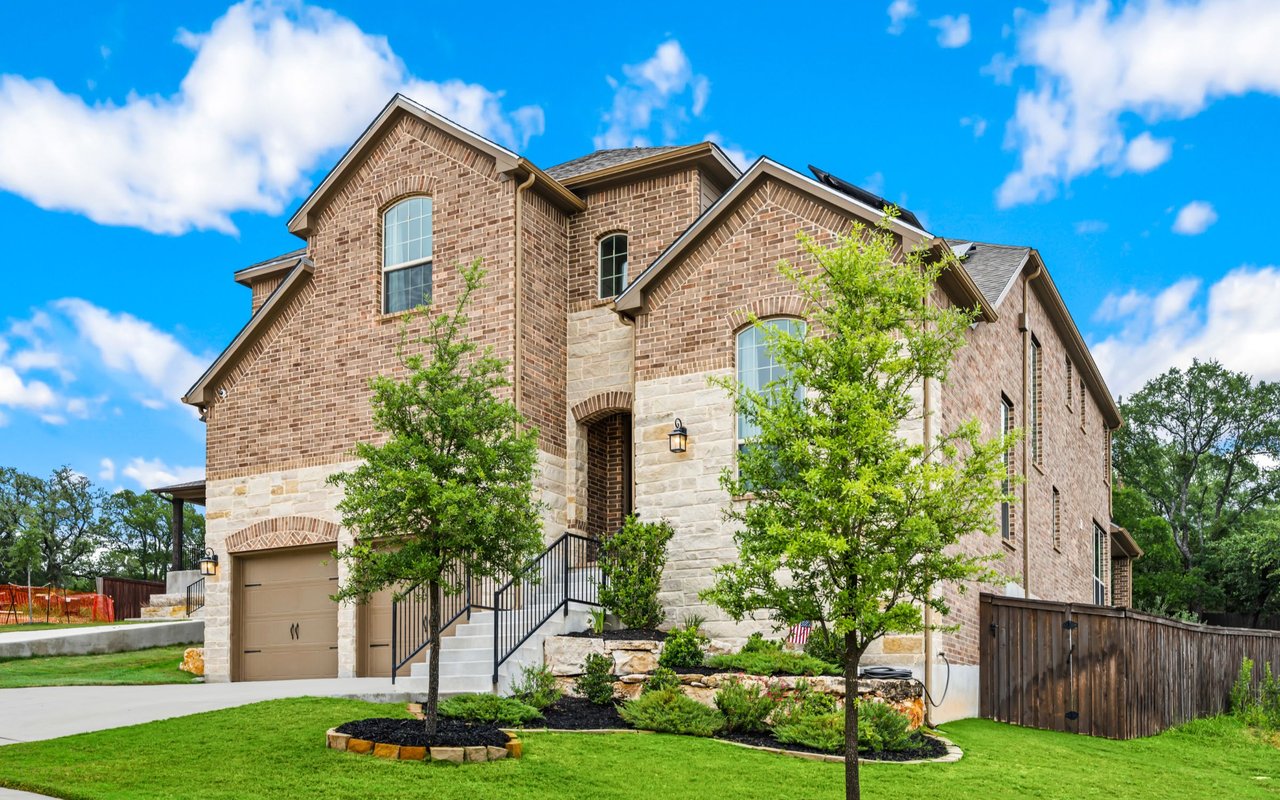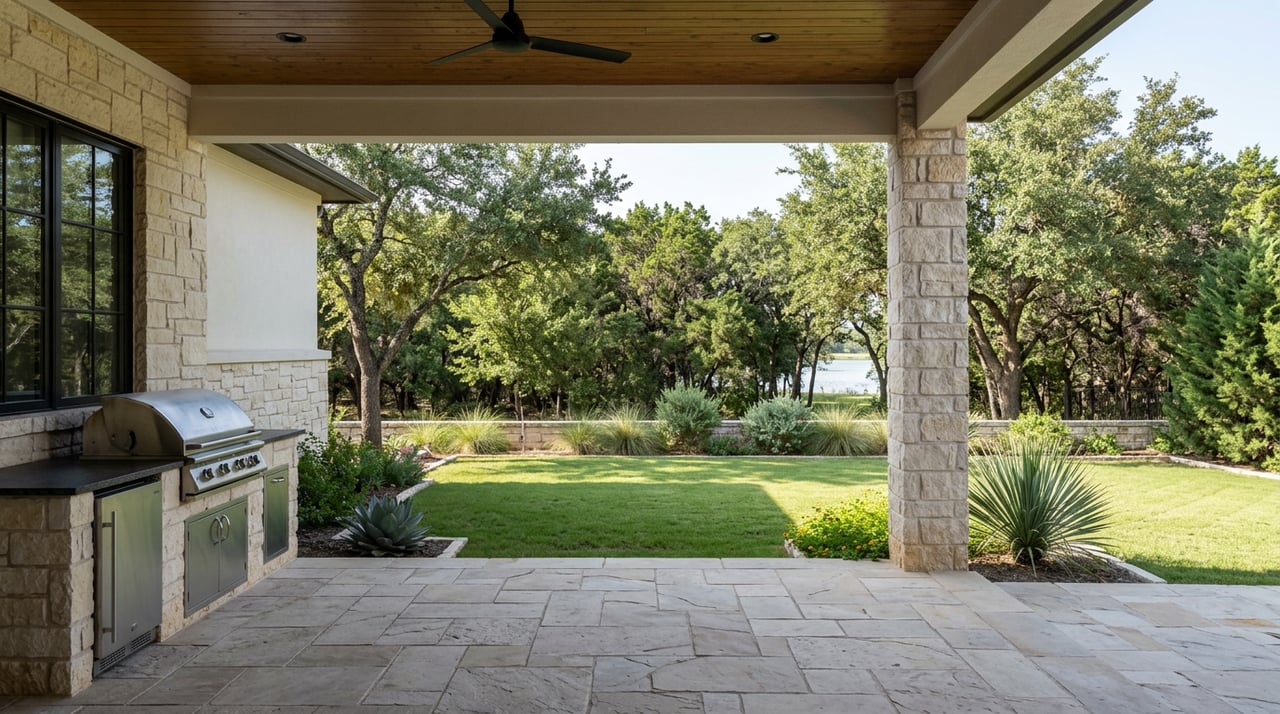
Trying to decide between true waterfront living and a near‑lake home in Kingsland? You are not alone. Both options offer the Lake LBJ lifestyle, but the right fit depends on your budget, how you plan to use the water, and how much maintenance you want to take on. In this guide, you will compare costs, access options, permits, and ongoing care so you can buy with clarity and confidence. Let’s dive in.
Waterfront or nearby: quick snapshot
If you want private boat access and panoramic views, waterfront is the gold standard. If you want lake life without the premium price or upkeep, near‑lake can be a smart move.
- Waterfront on Lake LBJ commonly lists from around $1M to several million dollars, depending on frontage, lot size, views, and dock rights. Inventory and prices change quickly in this small market.
- Near‑lake and off‑water homes in Kingsland often trade in lower price bands, frequently from the mid‑$200s to the mid‑$600s for many properties, depending on size, age, and proximity to amenities.
- Both paths work. The key is how you plan to access the water and what level of maintenance you prefer.
Price drivers on Lake LBJ
What pushes waterfront values higher
- Direct, deeded shoreline and private dock potential.
- Open‑water frontage, long views, and orientation for sun and shade.
- Lot size, buildability, and site conditions like slope and rock.
- Proximity to marinas and public ramps for guests.
How near‑lake homes save you money
- No premium for deeded shoreline or dock rights.
- Lower ownership costs with fewer shoreline responsibilities.
- Flexibility to use marinas, HOA access, or public ramps for boating.
Access: docks, slips, and public ramps
When you buy on a managed reservoir like Lake LBJ, water access is regulated. Before you assume you can build or rebuild a dock, check the rules.
- Private docks and marinas on the Highland Lakes must comply with the Lower Colorado River Authority. Review LCRA’s overview of docks and marinas.
- Residential docks have specific safety and construction criteria. LCRA’s dock safety standards cover design, flotation, lighting, and maximum extension from shore.
- Not every shoreline is eligible for a dock. Confirm submerged‑land status and any prior LCRA approvals before you rely on an existing structure.
- Prefer a slip instead of your own dock? Local marinas offer memberships, slip leases, and waitlists that vary by season. See a local example at Clearwater Marina.
- Launching for the day is easy through public sites listed by Texas Parks and Wildlife. Check Lake LBJ public access and ramps.
Permits and rules to verify
Waterfront improvements require planning and paperwork. Build your timeline and budget with permits in mind.
Docks, buoys, and submerged land
- LCRA regulates docks, buoys, and marinas. Some parcels require LCRA permission for structures over submerged land. Start with the LCRA docks and marinas page to understand applicability.
- Placement of many buoy types requires authorization. There are limits for no‑wake markers under lakewide authorization.
- LCRA’s 2023 updates include a ban on new community marinas, which affects shared‑dock development options.
Shoreline stabilization, dredge, and fill
- Riprap, bulkheads, boat ramps, and dredging often require LCRA notification or permits. Review the Highland Lakes Dredge & Fill Ordinance.
- Larger projects may involve state or federal agencies, technical drawings, and mitigation. Build ample time into your plan.
Maintenance and environment
Dock care and compliance
- Expect periodic maintenance for decking, hardware, anchors, flotation, and electrical components. LCRA requires ongoing upkeep. See the dock safety standards for prohibited flotation types and lighting rules.
Aquatic vegetation
- Hydrilla, milfoil, and other invasive plants can affect boat operation. Treatment plans must align with LCRA and TPWD guidance. LCRA provides aquatic vegetation resources.
Septic and utilities
- Many lake‑area homes use on‑site sewage systems rather than municipal sewer. Confirm permits, system age, and capacity.
- TCEQ explains homeowner responsibilities for septic systems at On‑Site Sewage Facilities.
Water levels, flood risk, and insurance
Lake LBJ is typically managed near a constant level for recreation, yet heavy inflows and flood releases can change levels temporarily. Lenders may require flood insurance if a home lies in a mapped Special Flood Hazard Area.
- Standard homeowners insurance does not cover flood. Ask for quotes early if your property is in a high‑risk zone.
- Use FEMA’s Map Service Center to check your parcel’s flood designation: FEMA Flood Map Service Center.
Budgeting and timeline: real‑world numbers
Building or updating a dock
Costs vary widely by design, materials, and lift capacity. National guides suggest many projects range from about $15 to $40 per square foot, with totals from roughly $3,000 for small floating docks to $50,000 or more for larger fixed docks or boathouses. Use local contractors for accurate bids. For ballpark planning, see this dock cost guide.
Using a marina instead
Marinas often charge monthly or annual slip fees, plus possible membership and ramp fees. In practice, leasing a slip can be far less expensive than building and maintaining a private dock. Waitlists are common during peak season. Contact nearby marinas like Clearwater Marina early to understand availability and pricing.
Lifestyle tradeoffs to consider
If you choose waterfront
- Immediate access to the water from your own property.
- Premium views and a strong connection to lake life.
- Higher purchase price and more responsibility for shoreline and dock upkeep.
- Potential for weekend boat traffic and noise depending on location.
If you choose near‑lake
- Lower entry price for similar living space and finishes.
- Less hands‑on maintenance with no shoreline or dock to manage.
- Use of marina slips or public ramps when you want to boat.
- Quieter yards set back from holiday and weekend activity.
Buyer due diligence checklist
Run through these items before you write an offer or remove contingencies:
- Dock status and documentation: Confirm ownership of submerged land and whether the dock is permitted or grandfathered. Start with LCRA’s guidance on docks and marinas.
- Shoreline work history: Ask for records of riprap, seawall, dredging, or bulkhead work and any notifications or permits. Review LCRA’s Dredge & Fill Ordinance.
- Flood zone and elevation: Download the FEMA panel for the parcel and ask your lender about insurance requirements. Use the FEMA Flood Map Service Center.
- Septic records: Request permits, maintenance logs, pump‑out history, and capacity. TCEQ outlines homeowner steps at On‑Site Sewage Facilities.
- Slip availability and fees: If you plan to use a marina, verify waitlists and pricing in writing. Contact local options like Clearwater Marina.
- Aquatic vegetation: Ask neighbors about hydrilla or milfoil history and whether a treatment plan exists. LCRA provides vegetation management guidance.
- Title and easements: Verify any recorded lake access easements or HOA deeded access that affect privacy, docking, or use rights.
How to decide what fits you
Start with your must‑haves and your budget. If your dream is stepping from your patio onto your boat, focus on well‑documented waterfront and build time for permitting and inspections. If your priority is a low‑maintenance lake lifestyle with smart value, target near‑lake neighborhoods with reliable access to a slip or convenient public ramps. In both cases, pair property selection with early checks on flood risk, septic, and shoreline status to avoid surprises.
When you are ready to compare live listings and run the numbers on a specific home, reach out for local guidance and a smooth plan from offer to close. If you want an experienced advocate who knows how to balance lake life, permitting, and value, connect with Shelley Herman.
FAQs
What does “constant level” mean for Lake LBJ buyers in Kingsland?
- Lake LBJ is typically managed near a constant level for recreation, but heavy inflows and flood releases can change levels temporarily, so still check FEMA flood maps and lender requirements.
How much does it cost to build a dock on Lake LBJ?
- Ballpark ranges vary widely by design and size, but national guides suggest about $15–$40 per square foot and totals from roughly $3,000 to $50,000 or more, with lifts adding extra.
What permits are needed for shoreline work at a Kingsland waterfront home?
- LCRA’s Dredge & Fill Ordinance governs riprap, bulkheads, dredging, and ramps, and some projects involve additional agencies, engineering, and mitigation.
If I buy near the lake in Kingsland, how can I access the water?
- Lease a slip at a local marina, buy into an HOA with deeded/shared access, or use public ramps listed by Texas Parks and Wildlife for day launches.
Do Kingsland lake homes require flood insurance?
- Lenders typically require flood insurance if a structure is in a FEMA Special Flood Hazard Area; confirm your parcel’s designation through the FEMA Map Service Center and get quotes early.